

Lever Belt Guide for Safer and Stronger Lifting
INTRODUCTION
If you’ve spent any time in a gym—whether you’re training casually, chasing PRs, or preparing for a competition—you’ve probably seen someone locking in a lever belt before attempting a big lift. Maybe you’ve watched someone confidently snap that metal lever into place and wondered why they use it, what it does, or if it’s something you should be using too. You might even have heard lifters talk about how a belt “adds strength” or “protects your back,” but no one really stops to explain how.
That’s exactly why this guide exists—to finally give you a clear, simple, and friendly explanation without the confusing technical jargon. Instead of throwing scientific terms at you, we’ll break everything down like a conversation you’d have with an experienced training partner who wants to help you progress, not overwhelm you.
A lot of gym-goers underestimate how much proper bracing and core stability affect their strength. They assume lifting is all about muscle and power. But the truth is, smart lifters understand that the right equipment—used correctly—can make a dramatic difference in performance, safety, and confidence. That’s where the lever belt comes in.
What Is a Lever Belt?
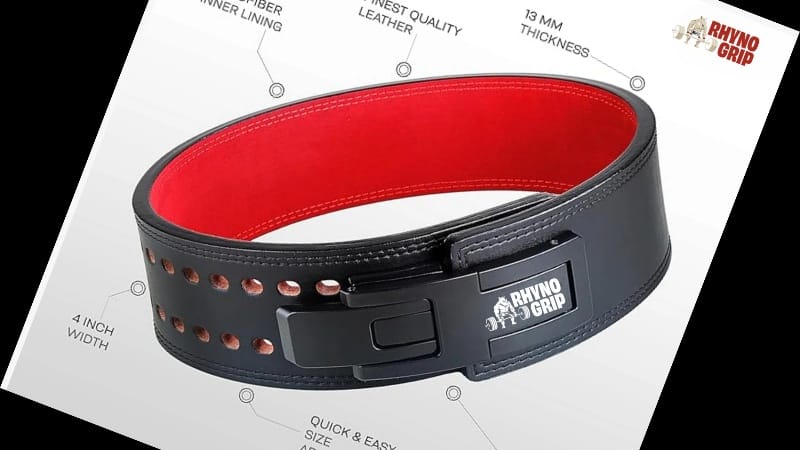
A lever belt is a supportive lifting belt designed with a lever-style buckle that locks tightly around your core. Instead of adjusting holes like traditional belts, a lever belt snaps shut instantly with a metal clasp.
Think of it as a fast-locking strength belt that gives you:
A tighter fit
Consistent compression
Less effort during setup
More core stability
This type of belt is common in strength sports because athletes need support that doesn’t shift mid-lift.
Why Do Lifters Use a Lever Belt?
Let’s keep it simple.
People use it because it:
✔ Increases core pressure
This makes your trunk feel solid so you don’t collapse during heavy squats or pulls.
✔ Protects your lower back
It prevents unwanted bending by boosting abdominal tension.
✔ Helps lift heavier
More stability = more power and control.
✔ Offers a consistent tightness
Unlike prong belts, a lever belt locks evenly every time.
✔ Saves energy
You don’t fight with the buckle before every set.
This is why you’ll see many strength athletes use it, including people training with a powerlifting lever belt, gym lever belt, or lever lifting belt.
How a Lever Belt Works
Imagine filling a balloon inside your stomach.
That “balloon” is your abdominal pressure.
The lever belt helps you:
Push your core outward against something firm
Maintain a rigid trunk
Transfer more force into the barbell
Keep your spine neutral
You’re not “lifting with the belt.”
You’re lifting with your core, and the belt simply helps your core push harder.
Benefits of Using a Lever Belt
• More Strength
You instantly feel stronger and more stable under a barbell.
• Better Technique
It helps you maintain a solid spine position.
• Reduced Injury Risk
Lower back rounding becomes less likely.
• Great for PR Attempts
Many people save the belt for heavy sets.
• Comfortable and Quick to Use
Snap on → Lift → Snap off
Fast and convenient.
When Should You Use a Lever Belt?
Contrary to what some people believe, you don’t need it for every exercise.
Best Time to Use It:
✔ Squats
✔ Deadlifts
✔ Overhead press
✔ Heavy rows
✔ Strongman movements
Not Necessary For:
✘ Warm-ups
✘ Isolation exercises
✘ Light training days
Use it when stability matters the most.
Common Mistakes People Make With a Lever Belt
❌ Wearing it too high
Belt should sit around your waist, not your ribs.
❌ Assuming it fixes bad form
Technique still comes first.
❌ Wearing it too tight
You should be able to take a deep “bracing breath.”
❌ Relying on it for everything
It’s a tool, not a crutch.
❌ Not bracing correctly
Most people don’t “breathe into their belly.”
This reduces the belt’s benefits.
How to Pick the Best Lever Belt
✔ Material
Choose real leather for durability.
✔ Thickness
10mm = comfortable and supportive
13mm = extremely stiff (for advanced lifters)
✔ Width
Standard is 4 inches.
✔ Buckle Quality
A strong lever buckle ensures long-term use.
✔ Purpose of Training
Powerlifters prefer stiff, thick belts
Gym lifters prefer moderate stiffness
Beginners prefer comfort-first belts
How to Wear a Lever Belt Correctly
Let’s keep it simple:
Stand upright
Wrap belt around mid-section
Take a deep breath
Lock the lever
Brace your core outward
Perform your lift
Unlock after your set
Consistency matters more than perfection.
Why Choose Us?
When you’re searching for a lever belt that delivers quality, durability, and reliable performance, RHYNO GRIP offers products designed for serious lifters. Our belts are crafted for maximum stability and a perfect lock every time.
Athletes who choose RHYNO GRIP appreciate the combination of comfort, strength-focused design, and long-term durability. Whether you're pushing for PRs or improving everyday lifts, our belts provide dependable support you can trust.
Final Thoughts
A lever belt isn’t just a gym accessory—it’s a performance tool that helps you lift safely and confidently. Whether you’re a beginner learning to brace properly or an experienced lifter pushing heavy numbers, a high-quality lever belt can elevate your training experience.
Use it wisely, pair it with proper technique, and you’ll see real results in strength, stability, and lifting confidence.
FAQs
1. Is a lever belt better than a prong belt?
Yes, because it gives consistent tightness, locks instantly, and saves time between sets.
2. Can beginners use a lever belt?
Absolutely. As long as you’re learning proper bracing and using it for compound lifts, beginners benefit from it.
3. Should I use a lever belt for deadlifts?
Yes, it helps maintain spinal alignment and improves bracing under heavy loads.
4. What thickness is best—10mm or 13mm?
10mm is great for most lifters. 13mm is extremely stiff and ideal for advanced athletes.
5. How tight should a lever belt be?
Tight enough to brace against, but not so tight that you can’t breathe deeply into your stomach.