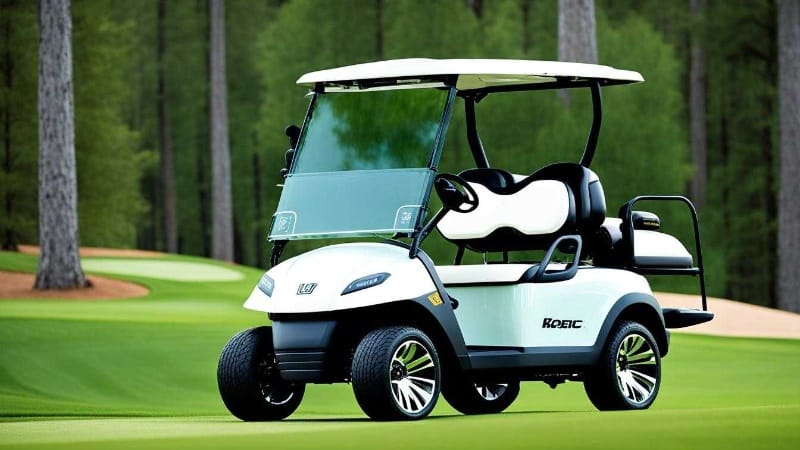

Premium Golf Carts with Durable Gears

Understanding Golf Cart Gears: How They Work and Why They Matter Golf carts may look simple, but beneath their compact frames lies a mechanical system that plays a major role in performance: the gear system. Whether used on a golf course, in gated communities, resorts, or industrial facilities, golf cart gears determine how smoothly the cart accelerates, climbs hills, carries loads, and maintains speed. Understanding how golf cart gears work can help owners maintain their carts better, diagnose problems, and choose the right cart for their needs. What Are Golf Cart Gears? Gears are mechanical components that transfer power from the motor or engine to the wheels. They regulate torque (pulling power) and speed by changing how fast the wheels turn relative to the motor’s rotation. In a golf cart, gears ensure that power is delivered efficiently, allowing the vehicle to move smoothly at low speeds while still having enough strength to handle inclines and cargo. Unlike automobiles, golf carts typically use simpler gear systems. Most carts are designed for low-speed operation, usually between 12 and 25 miles per hour, so their gearing prioritizes torque and reliability over high-speed performance. Types of Golf Cart Gear Systems Golf carts generally fall into two categories: electric and gas-powered, and each uses gears differently. Electric Golf Cart Gears
Electric golf carts rely on an electric motor connected to a differential gear system. These carts do not have traditional transmissions with multiple gears. Instead, the electric motor delivers power directly to the rear axle through a reduction gear set. This setup allows the motor to spin quickly while the wheels rotate more slowly, providing strong low-end torque. The simplicity of electric gear systems means fewer moving parts, quieter operation, and less maintenance. However, performance is heavily influenced by gear ratios and motor output. Gas-Powered Golf Cart Gears
Gas golf carts use small internal combustion engines paired with a continuously variable transmission (CVT). The CVT automatically adjusts gear ratios based on speed and load, allowing smooth acceleration without manual gear shifting. From the transmission, power is transferred to the differential gears and then to the wheels. Gas carts tend to perform better on hills and when carrying heavy loads, largely due to their gear and transmission design working together to maintain torque. Gear Ratios and Their Importance A gear ratio refers to the relationship between the number of teeth on two meshing gears. In golf carts, the gear ratio determines how many times the motor rotates for each full turn of the wheels. High gear ratios provide more torque but lower top speed. These are ideal for hilly terrain, off-road use, or carts that frequently carry passengers or equipment. Low gear ratios allow for higher top speeds but reduce pulling power. These are commonly used on flat terrain where speed is more important than torque. Choosing the correct gear ratio is essential. A mismatch can lead to poor performance, overheating motors, or excessive wear on components. Forward, Reverse, and Neutral Functions Golf carts do not typically have multiple forward gears like cars, but they do have directional control. This is achieved through a forward and reverse (F&R) switch or lever. In electric carts, reversing direction is done electrically by changing the polarity of the motor. In gas carts, the transmission and gear system handle direction changes mechanically. Neutral allows the cart to roll freely without power being delivered to the wheels, which is useful during towing or maintenance. Common Gear Problems in Golf Carts Like any mechanical system, golf cart gears can experience wear and failure over time. Common issues include: Grinding or whining noises, often caused by worn differential gears or improper lubrication Slipping or jerky movement, which may indicate transmission or CVT problems Loss of power, sometimes linked to damaged gears or incorrect gear ratios Overheating, often due to excessive load or mismatched gearing Regular maintenance, including checking gear oil levels and inspecting components, can prevent many of these issues. Upgrading Golf Cart Gears Many owners choose to upgrade their golf cart gears to improve performance. Common upgrades include installing high-torque gear sets for off-road use or higher-speed gears for street-legal carts. While upgrades can significantly improve performance, they must be done carefully to avoid damaging the motor or reducing reliability. Before upgrading, factors such as motor type, terrain, load capacity, and battery system should be considered. Professional installation is often recommended for complex gear modifications. Conclusion Golf cart gears are a crucial but often overlooked part of these versatile vehicles. They control how power is delivered, influence speed and torque, and determine how well a cart performs in different environments. Whether electric or gas-powered, the right gear setup ensures smooth operation, efficiency, and longevity. By understanding how golf cart gears work and maintaining them properly, owners can enjoy better performance, fewer mechanical issues, and a more reliable ride—whether on the fairway, the street, or the worksite.