
USA Study Visa Application Timetable – Admission to Arrival
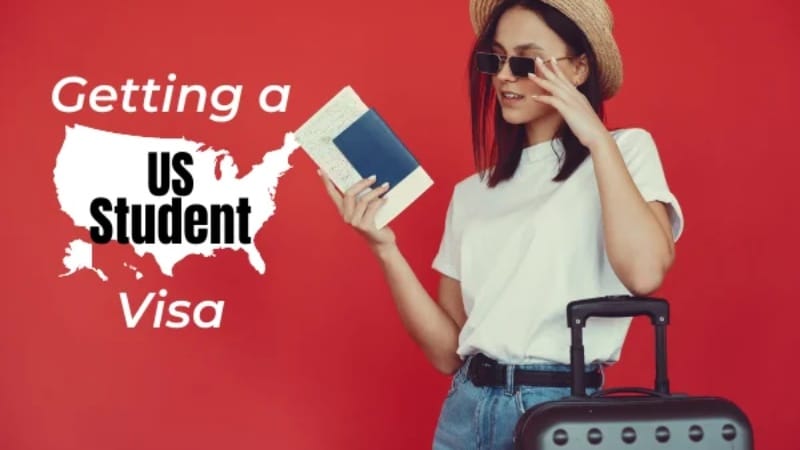
Obtaining a study visa for the United States involves several months of planning and preparation. It is not just a matter of getting admission into a university. But also, of processing each stage of the visa procedure in the correct sequence and at the correct time. Students who prepare in advance are less prone to last-minute problems. Proper time planning alleviates stress. If all this appears to be too much for you, now you don't have to worry.
You can just visit the best immigration consultants who specialize in taking students through each and every step of the application. From choosing the appropriate university to paper preparation, and preparing for interviews. And even organizing mock visa interview practice sessions, professional consultants ease the process for you. They're experienced enough not to allow you to fall into common traps and schedule your deadlines in advance. So that you continue to be stress-free while preparing to study abroad.
USA Study Visa Application Timeline – From Admission to Arrival.
A step-by-step guide is given below, where each point is explained.
University Applications
The process begins almost a year before your preferred joining date.
The students should begin by shortlisting the universities to those suitable for their course of study, career goals, and finances.
Standardized tests. Such as IELTS, TOEFL, GRE, or GMAT preparation are usually required, depending on the intended program.
Applications to U.S. universities entail a package of supporting documents like transcripts, letters of recommendation, essays, and resumes. After screening the application, the university sends a crucial document referred to as the Form I-20 (for F-1 or M-1 applicants) or the DS-2019 (for J-1 applicants). This isn't an admission letter. It's a formal notice of admission on you with information such as your beginning date, length, and estimated fee. Getting this document is the very first tangible step. That places you into the process for obtaining a visa.
SEVIS Fee
After getting your I-20 or DS-2019, the second step is to pay the SEVIS fee. This is compulsory for all international students as it confirms that your information is formally added to the U.S. students' database. You will not have your visa application sent if you do not do so. Usage of online mode for payment, and once you have made the payment, a receipt is issued that you print and then present later during your visa interview.
The SEVIS fee is usually overlooked by the students until the last minute, but it is an important process. It not only notifies you that you are a valid student applicant. But also shows that you are committed to studies in the U.S. Payment of the fee at least five or six months before the date when you wish to depart gives you ample time.
DS-160 Form
The second is filling out the DS-160 form, which is the official non-immigrant online U.S. visa application form, after paying the SEVIS fee. Give detailed information about yourself, your educational background, and the reason for visiting the U.S. Upload a recent passport-sized photograph, along with the U.S. strict requirements, and at times, technical problems arise for students. A single error can lead to a delay or correction in the future.
After finishing the DS-160 form, you have a DS-160 confirmation page that has a barcode. Print the page and take it with you to your visa interview, since it assists in linking your online application with your in-person application. Completing the form in full four to five months before your travel date keeps you in line while planning an interview time.
Visa Appointment
After DS-160, students schedule two appointments: one at the Visa Application Center (VAC) and another at the U.S. Embassy or Consulate. The biometric data, like photographs and fingerprints. All are gathered in the VAC. And the appointment at the consulate or embassy is for an interview for a visa. Payment of the visa application fee is also a prerequisite for this procedure. It makes sense to arrange these appointments three or four months ahead of time. Reserve Interview times at short notice, particularly during peak intake times when lots of students apply at the same time. Scheduling early time slots gives you sufficient time to process your visa prior to the start of your course
Visa Interview
The visa interview is the most critical aspect of the whole process. In their visit for the interview, the students should have the list of documents, including their valid passport, Form I-20 or DS-2019, SEVIS fee receipt, DS-160 confirmation, finance documents and education transcripts.
By the time of the interview, an American visa officer will be questioning your study intent, your financial capability, and your intention to return to your home country upon completing your studies. What you chose the United States for, what you chose a specific university for, how you plan to finance the studies, and what you have planned to do after you have finished studying are common questions. A calm, assertive, and honest attitude will go a long way. After your approval, the officer takes your passport and then returns it stamped with a visa some days or weeks later. It organizes two or three months in advance of your own travel date to provide sufficient preparation time for your journey. As per the laws of the USA regarding visas, F-1 visa students can enter the USA not before 30 days of the effective date of the course of study beginning, as indicated in the I-20. Having passed inspection, you officially begin life as an American student. It's the culmination of months of planning, preparation, and persistence. Not quite sure about the whole process? Relax—you're not alone. You can search for the best USA study visa consultants who are well-versed with these steps. The US study visa application process is long, but divided into phases; it is achievable. Every step, from college applications to payment of fees, form filling, undergoing interviews, and finally arriving in the country, is a stepping stone to the next. Early planners, who mind deadlines and work hard at every step, can have a silky ride.USA arrival
Conclusion
_1770707846763.jpg?alt=media&token=ff576560-d36d-4fcb-ae82-3f571eee94e3)